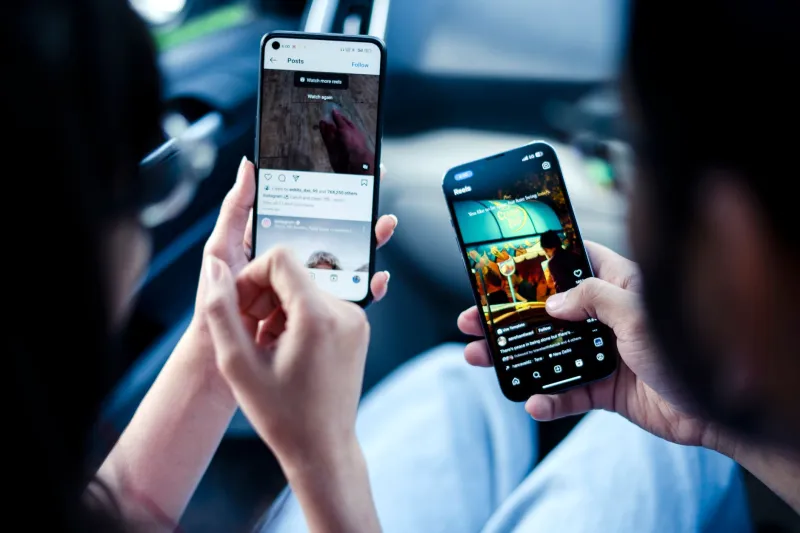
Why Picking Something to Watch Takes Longer Than the Show Itself

It's 8:30 on a Tuesday night. You've got an hour, maybe ninety minutes if you push it. You open Netflix, scroll for a bit, flip over to Hulu, remember you have Max, check that too, and then — almost without realizing it — it's 9:15 and you've committed to nothing. You close the app. You go to bed vaguely annoyed at yourself.
This isn't a personal failure. It's a design problem that's gotten completely out of hand.
The Tyranny of Too Much
There's a concept in behavioral psychology called the paradox of choice, and streaming platforms have essentially built their entire business model on ignoring it. The idea is simple: the more options you have, the harder it becomes to feel satisfied with any one of them. When you had five channels and a TV Guide, you watched what was on. And weirdly? You were probably fine with it.
Now you've got a catalog that would take multiple human lifetimes to exhaust, and the psychological weight of that is real. Every time you pick something, you're implicitly passing on thousands of other things. Your brain, being the anxious little gremlin it is, can't quite let that go.
Researchers at Columbia University ran a famous study years ago using jam samples at a grocery store. When shoppers were offered 24 varieties, they were less likely to buy anything than when offered just six. Streaming is basically that jam study, except the jam is prestige television and you're doing it every single night.
The Algorithm Isn't Actually Helping
Here's where it gets genuinely frustrating. Every major platform will tell you their recommendation engine is designed to surface exactly what you want, personalized just for you. And on paper, that sounds great. In practice? It mostly just shows you the same twelve things you've already watched, a sequel to something you half-liked two years ago, and whatever the platform is spending the most money to promote that month.
The algorithm isn't built for discovery. It's built for retention. There's a difference, and it's not subtle. Discovery means finding something new that surprises you. Retention means keeping you on the platform long enough that you don't cancel your subscription before the next billing cycle.
Those are different goals, and the algorithm is very clearly optimized for the second one. Which means that the more you use a platform, the narrower your recommendations often become. You're not being shown the full catalog — you're being shown a carefully curated slice of it designed to feel familiar enough that you won't bounce.
Remember When You Just Flipped Channels?
There's something almost nostalgic about the era of actual channel surfing, and I say that as someone who absolutely complained about it at the time. You'd flip through, land on something mid-episode, and just... watch it. No commitment required. No sense that you were making a permanent choice. If it was bad, you kept flipping. If it got interesting, you stayed.
That low-stakes quality is almost entirely absent from modern streaming. Every title has a thumbnail optimized to make it look like the most important thing you've ever seen. Every description is written to sound like a life-changing experience. The sheer production value of how these platforms present their content creates a weird pressure — like you'd better be sure before you press play, because this is a decision that matters.
It doesn't, obviously. But the design language tells you it does.
The 45-Minute Browse Is Its Own Ritual Now
At this point, I'd argue that scrolling through streaming options has become a leisure activity in its own right, completely separate from actually watching anything. People will spend a solid chunk of their evening browsing, reading descriptions, watching thirty-second previews, and then landing on something they've already seen before.
And honestly? That browsing behavior is exactly what the platforms want. Every minute you spend on the app — even if you're not watching anything — is a minute you're engaged with their interface, potentially seeing ads if you're on a lower tier plan, and reinforcing the habit of opening the app when you're bored.
Your indecision is literally their product.
What We Actually Do When We Can't Decide
The data on this is kind of wild. Studies have consistently shown that when faced with too many streaming options, viewers default to one of three behaviors: they rewatch something familiar, they put on background noise they've seen a hundred times, or they give up entirely and scroll social media instead.
None of those outcomes are what the platforms are theoretically selling. They're selling access to new stories, new worlds, new experiences. But the design of their own interface is actively working against that promise.
There's also a generational split worth noting here. Older viewers tend to feel more overwhelmed by large catalogs. Younger viewers — particularly Gen Z — have developed faster filtering habits, often using social media to pre-select what they'll watch before they even open an app. TikTok has essentially become a better recommendation engine than Netflix's actual recommendation engine, which is both impressive and a little embarrassing for Netflix.
So What Do You Actually Do About It?
A few things genuinely help, even if they feel a little counterintuitive. Setting a hard time limit on browsing — like, you get five minutes and then you pick something, anything — removes a lot of the pressure. Treating a show like a low-stakes experiment rather than a commitment also helps. You don't have to finish it. You don't even have to like it.
Some people swear by keeping a running list elsewhere — a notes app, a shared doc with friends — so the browsing and the choosing happen at different times. You browse when you're not tired, you watch when you are. It sounds overly organized for something as casual as watching TV, but it genuinely cuts down on that 45-minute scroll spiral.
Or, you know, you could just put on The Office again. No judgment here. We've all been there.
The bottom line is that streaming promised to make entertainment easier, and it made it more complicated in ways we're still sorting out. The content is great. The experience of finding it? That part's still a mess — and the platforms aren't exactly rushing to fix it, because your confusion is, quietly, very good for their business.