Nobody Else Gets It — And That's Exactly Why You Love Them: The Rise of the Comfort Character
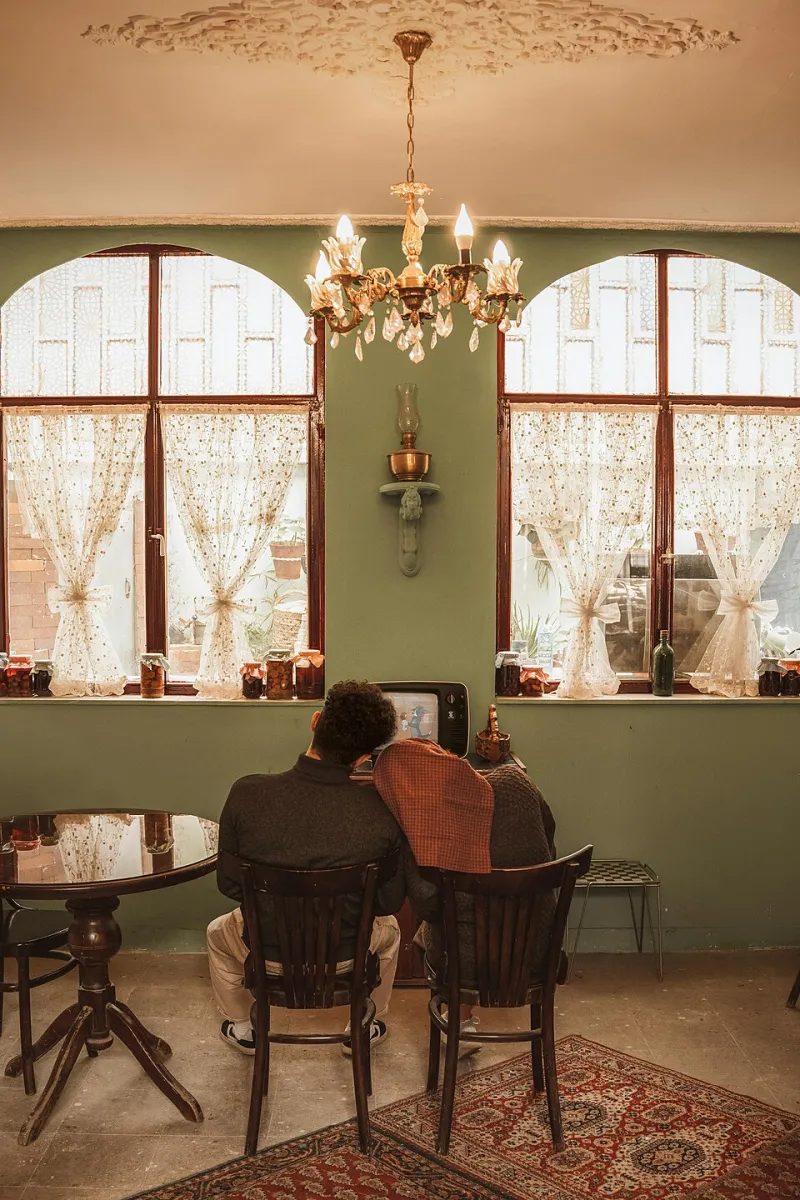
Photo: Voyefex11, CC0, via Wikimedia Commons
You've been there. You're deep in a conversation about your favorite show, and you casually mention that your absolute favorite character is — not the lead, not the villain, not even the funny best friend. It's the quiet guy in the background who had maybe three lines across the whole season. Your friend stares at you like you've lost it.
But here's the thing: you haven't lost it. You've found something.
This is the comfort character phenomenon, and it's one of the most quietly fascinating things happening in how Americans consume entertainment right now. It's the reason fan wikis have sprawling, lovingly detailed pages for characters who appeared in two episodes. It's why certain TikTok edits of a barely-seen background player rack up millions of views. And it's why the comment section of any major show's Reddit thread will always — always — have at least one person saying, "Can we talk about [obscure side character] for a second?"
What Even Is a Comfort Character?
The term gets thrown around a lot, but at its core, a comfort character is exactly what it sounds like: a fictional person you return to for emotional stability. They make you feel safe, seen, or understood in a way that's hard to fully articulate. Sometimes it's a main character. But a surprising number of people find their deepest attachments forming around figures the writers barely developed.
Think about shows like The Office — sure, Michael Scott is the center of the universe there, but there's a whole community of fans who will go to the mat for Creed Bratton, a character whose entire arc is basically an ongoing mystery joke. Or consider Parks and Recreation, where Garry/Jerry/Larry Gergich, the perpetual butt of the office's jokes, became a legitimate fan favorite with his own devoted following who saw something tender and real in his quiet dignity.
These aren't accidents. They're windows.
The Psychology Behind the Attachment
So why does this happen? Why do we latch onto the character who gets maybe five minutes of screen time over three seasons?
A big part of it comes down to projection. When a character isn't fully fleshed out by the writers, our brains do something remarkable — they fill in the gaps. We assign motivations, backstories, emotional depth. In a very real sense, we co-author that character. And once you've done that, the attachment isn't just to the show. It's to the version of that character you helped create in your own mind.
There's also something to be said for the underdog effect. American audiences, culturally, have always had a soft spot for the overlooked. When everyone else in the story is fawning over the hero or fearing the villain, there's something magnetic about the person standing quietly at the edges. We recognize something in them — maybe the feeling of being underestimated, or of having more going on inside than anyone around us bothers to notice.
And honestly? Minor characters often carry less narrative baggage. They're not burdened by plot armor or major story arcs. They just exist in the world of the show, which can feel more human, more relatable than the hyper-dramatic lives of the main cast.
Fan Communities Turn the Volume Up
The internet took this natural tendency and supercharged it. Before social media, if you loved a background character, you might mention it to a friend and get a blank stare. Now, you can find your people within minutes.
Fan communities on Reddit, Tumblr, Twitter/X, and TikTok have become incubators for minor character obsessions. Someone posts a gifset of an overlooked character's subtle facial expression in episode seven. Someone else writes a 3,000-word character analysis. A third person makes a fan edit set to a Phoebe Bridgers song. Suddenly, a character the showrunners forgot about by season two has an entire mythology built around them by people who cared enough to look closer.
This happened in a big way with characters like Neville Longbottom in Harry Potter (before his glow-up arc), who had devoted fans long before the books gave him his due. It happened with Entrapta in She-Ra and the Princesses of Power, whose complexity fans dissected endlessly. It's happening right now with dozens of minor players in shows currently airing — characters whose names don't even appear in the promotional material.
These fan communities aren't just celebrating these characters. They're advocating for them. And increasingly, creators are listening. Writers have confirmed in interviews that they expanded roles specifically because of fan response to minor characters. In the streaming era, where audience data is everything, a cult following for a side character can legitimately change the shape of a show.
What It Says About Us
Here's where it gets a little philosophical. The comfort character phenomenon isn't just a quirky fan behavior — it's a reflection of how we're looking for connection in the stories we consume.
We live in an era of parasocial relationships, where the lines between audience and creator, between viewer and character, are blurrier than they've ever been. We follow the real people behind the roles on Instagram. We watch behind-the-scenes content. We know the actors' dogs' names. In that environment, the characters we love stop feeling like fictional constructs and start feeling like… people we know.
And just like in real life, the people we end up loving most aren't always the loudest ones in the room. Sometimes it's the quiet one. The background player. The character nobody else is paying attention to.
There's something deeply human about noticing the person everyone else walks past.
Your Obscure Fave Is Valid
If you've ever had to explain — with full seriousness — why a character who appeared in three scenes is your entire personality, you don't need to justify that. The comfort character you've claimed as your own says something real about what you value, what you need, and how you engage with stories.
And somewhere out there, there's a whole community of people who get it completely.
The writers may have forgotten about your character by episode four. But you didn't. And in the age of fan wikis and Reddit threads and TikTok edits, that kind of love has a way of making even the most overlooked character feel like the center of the whole universe.
Which, honestly? Is kind of beautiful.