Audience Approved: How Fans Became the Most Powerful Casting Directors in Hollywood
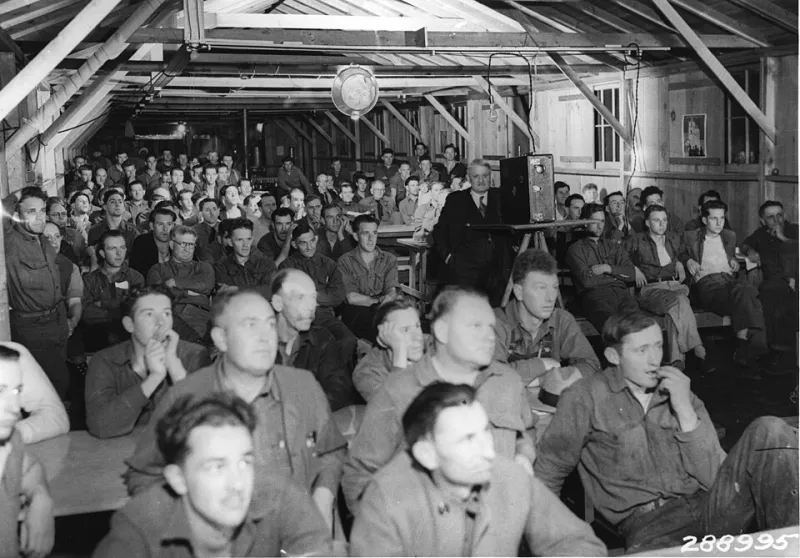
Photo: OSU Special Collections & Archives : Commons, No restrictions, via Wikimedia Commons
There was a time when an actor's fate rested almost entirely in the hands of a few gatekeepers — producers, directors, studio heads, and the occasional powerful agent who could make one phone call and change everything. That world still exists, sort of. But it's sharing the stage now with something far more chaotic, far more democratic, and honestly, far more fascinating: the audience.
You. Me. The person rage-tweeting at midnight about a casting announcement. We're all in the room now, whether Hollywood invited us or not.
The Algorithm Didn't Replace the Old Boys' Club — It Complicated It
Let's be real: the entertainment industry has never been a perfectly fair meritocracy. Connections, nepotism, and straight-up favoritism have always played a role in who gets cast and who gets overlooked. What's changed isn't the existence of those dynamics — it's that they now have to compete with an entirely different force: viral public opinion.
Streaming platforms like Netflix, HBO Max, and Hulu are sitting on mountains of viewer data. They know which actors people search after finishing a show. They know which performances generate social media spikes. And increasingly, they're using that information to make casting decisions that would have seemed bizarre even ten years ago. A relatively unknown actor can land a supporting role in a limited series, blow up on TikTok, and find themselves headlining their own project within eighteen months. That pipeline is real, and it's accelerating.
The flip side? That same pipeline runs in reverse just as fast.
From Nobody to Somebody: The Streaming Launch Pad
Consider what happened with actors like Regé-Jean Page after Bridgerton dropped on Netflix. He was known in industry circles, sure, but he wasn't a household name. One season of a globally distributed streaming show and suddenly he's being discussed as a potential James Bond. The audience didn't just watch his performance — they campaigned for his future. Fan accounts, viral clips, thirst posts (let's be honest), all of it translated into tangible career momentum.
Or look at the trajectory of someone like Jenna Ortega. She'd been working steadily for years, but Wednesday turned her into a cultural phenomenon practically overnight. The "Wednesday dance" scene alone generated the kind of organic reach that no marketing budget could manufacture. Netflix noticed. More projects followed.
This is the upside of audience power: genuine talent that might have taken decades to break through under the old system can now find its audience almost immediately. There's something genuinely exciting about that.
The Cancel Spiral and What It Actually Does to Careers
But here's where it gets complicated and, depending on your perspective, either thrilling or terrifying.
The same audiences that can launch a career can dismantle one. And the standards for what constitutes a cancellable offense have shifted dramatically — sometimes for completely legitimate reasons, sometimes in ways that feel disproportionate or driven more by pile-on momentum than genuine accountability.
When resurfaced social media posts, old interviews, or allegations surface about an actor, the response is no longer confined to industry whisper networks. It goes public instantly. Studios and streaming platforms, acutely aware of subscriber sentiment, have shown they'll quietly shelve projects, recast roles, or distance themselves from talent when the online temperature gets hot enough. Sometimes this results in real consequences for people who genuinely did harmful things. Other times, it catches people in decades-old moments that don't reflect who they are now.
Either way, the mechanism is the same: public pressure has become a legitimate lever that moves industry decisions. That's a massive shift in power, and it's one that the entertainment business hasn't fully figured out how to navigate.
Casting Announcements Are Now Public Events — For Better or Worse
Remember when a casting announcement was just... an announcement? Now it's an event that triggers immediate community deliberation. When a beloved book or comic gets adapted, fans don't wait to see the performance — they render their verdict the moment the name drops. Sometimes this pressure leads to genuinely thoughtful conversations about representation and whether the right actor was chosen for a role that carries cultural weight. That matters.
Other times, it's just noise. Reflexive outrage from people who've decided before a single frame is shot that they hate this choice. The internet has a remarkable ability to whip itself into a frenzy over hypotheticals, and actors — real human beings with real careers — are often caught in the middle of that.
The industry's response has been interesting to watch. Some studios have started keeping casting tighter for longer, trying to build audience investment in a project before revealing who's in it. Others have leaned into the discourse, essentially using fan debate as free marketing. Neither approach is entirely satisfying, but both are adaptations to the same underlying reality: you can't make a major entertainment decision in a vacuum anymore.
What This Means for Who Actually Gets Hired
Here's the question worth sitting with: is audience-driven casting power actually making Hollywood more diverse, more interesting, and more responsive to what people want? Or is it just replacing one set of biases with another?
The honest answer is probably both, depending on the situation. Fan communities can be powerful advocates for representation — pushing for actors from underrepresented groups to be considered for roles they historically wouldn't have been. That's real progress. But those same communities can also be deeply conservative about change, rejecting casting choices that deviate from their mental image of a character in ways that have less to do with craft and more to do with familiarity.
Meanwhile, studios are increasingly casting with one eye on social media followings. An actor with three million Instagram followers brings a built-in promotional infrastructure that a more talented but less visible performer simply can't match. That's a different kind of gatekeeping — one that rewards personal brand-building over pure craft. Whether that's better or worse than the old system is genuinely debatable.
The Living Room Has a Seat at the Table Now
The casting couch as a symbol of industry abuse never disappeared — it just got complicated by a thousand other power dynamics layering on top of it. What's undeniably true is that the audience has more influence over Hollywood's decisions than at any point in the medium's history. That influence can be wielded thoughtfully or recklessly, and right now we're seeing both happen in real time.
For actors, the new calculus is genuinely strange. You need the audience on your side, but you can't fully control them. A single performance in the right project at the right moment can redefine your entire career trajectory. A single bad tweet from eight years ago can derail it.
For the rest of us sitting in our living rooms, streaming queues open and opinions fully formed? We should probably be a little more conscious of the fact that we're not just passive consumers anymore. We're participants. And the decisions we make — what we watch, what we amplify, what we condemn — actually matter to real people's livelihoods.
That's a lot of power for a couch.