Rooting for the Bad Guy Has Never Felt This Good — Here's Why
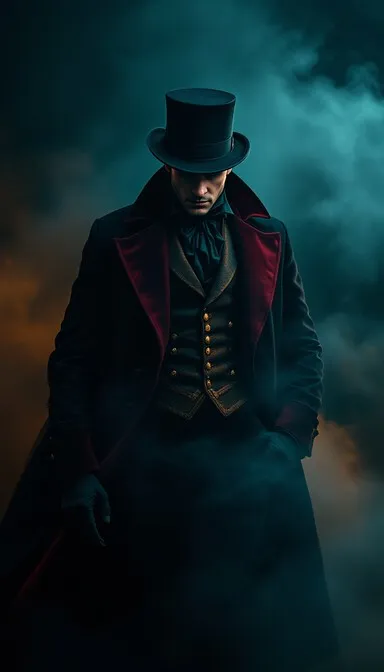
Photo: dramatic villain character dark cinematic lighting moody portrait, via images.stockcake.com
Somewhere between Walter White's first batch of meth and Killmonger laying out his entire worldview in under five minutes, something shifted in American pop culture. We stopped waiting around for the hero to save the day. We started pulling for the person standing in their way.
And honestly? Nobody's apologizing for it.
Villain origin stories and morally complex antagonists have quietly taken over the entertainment landscape. They're the characters people make fan edits about, write Reddit essays defending, and argue over at the dinner table long after the credits roll. The hero is still there, sure — but they're increasingly playing second fiddle to someone far more interesting.
So what's actually going on here?
The Hero Formula Got Old
For a long time, storytelling followed a pretty reliable pattern. Good guy faces bad guy. Good guy struggles. Good guy wins. Roll credits. That structure worked for decades, and it still does in plenty of contexts. But somewhere along the way, audiences started getting restless.
The issue isn't that we stopped caring about heroes — it's that a lot of modern heroes feel pre-packaged. Their goodness is a given. Their moral compass never really wavers. They make the right call, and we're supposed to feel inspired. But inspiration without friction? That's just a poster on a wall.
Villains, on the other hand, come pre-loaded with friction. Their choices are messy. Their logic, while often twisted, is frequently understandable. And that's where the magic happens.
When the Backstory Does All the Heavy Lifting
The villain origin story has become one of the most powerful tools in a writer's arsenal — not because audiences love darkness for its own sake, but because a well-crafted backstory forces us to confront an uncomfortable truth: most people don't start out broken.
Take Thanos. On paper, he's a genocidal alien who wants to wipe out half of all life in the universe. That should be an easy villain to hate. But the Russo brothers gave him a perspective — a warped, catastrophically wrong perspective, sure — that made him feel like a character who arrived at his conclusions through a series of painful experiences rather than just being born evil. Audiences didn't agree with him. But a surprising number of them understood him, and that understanding created a strange, uncomfortable investment.
The same goes for characters like Cersei Lannister, whose cruelty was inseparable from her survival instincts. Or Gus Fring, whose meticulous evil was wrapped in a calm so convincing you almost forgot what you were watching. Or even Homelander from The Boys, a character so deeply unhinged that watching him unravel feels less like horror and more like witnessing the logical endpoint of unchecked power and emotional neglect.
These aren't just "bad guys with sad pasts." They're fully realized people whose choices make a terrible kind of sense.
The Psychology of Rooting for Someone You Shouldn't
Psychologists have a term for this — narrative transportation — the idea that when we're deeply immersed in a story, we temporarily adopt the perspective of the characters we're following. When a story is told primarily through a villain's point of view, we don't just observe them. We inhabit them, at least a little.
There's also something called the "dark triad" fascination — a well-documented tendency for people to find charismatic, confident, rule-breaking characters compelling even when their behavior is objectively terrible. It's why Tony Soprano was must-watch TV. It's why people made "I am the one who knocks" into a cultural touchstone. There's a vicarious thrill in watching someone operate outside the rules, especially when the rules themselves feel rigged.
But here's the part that actually matters: rooting for a villain doesn't mean endorsing their worldview. It means the storytelling is working. When you catch yourself hoping a fictional murderer gets away with it, that's not a character flaw — that's a writer doing their job exceptionally well.
Redemption Arcs Are Their Own Kind of Addiction
Not every compelling antagonist stays one. Some of the most emotionally satisfying television moments of the last decade have come from watching a villain inch — slowly, messily, sometimes infuriatingly — toward something resembling humanity.
Zuko from Avatar: The Last Airbender is probably the gold standard. His redemption arc is so carefully constructed that even viewers who knew where he was headed felt the emotional payoff hit like a freight train. Jaime Lannister (before the writers seemingly forgot who he was in the final seasons) was another one — a man whose capacity for both cruelty and unexpected decency made him one of the most debated characters in recent memory.
What makes these arcs work isn't the transformation itself — it's the cost of it. A villain who becomes good without losing something doesn't feel earned. But when change comes with real consequences, when the character has to sacrifice something meaningful to step toward the light, that's when audiences lose their minds in the best possible way.
What This Means for Storytelling Going Forward
The rise of the morally complex antagonist isn't a fad. It's a response to an audience that's grown more sophisticated and, frankly, more skeptical of easy answers. People in 2024 don't want to be told who to root for — they want to figure it out themselves, argue about it online, and change their minds three times before the season finale.
Streaming has accelerated this shift. When you have ten hours to develop a character instead of two, you have room to show the full picture — the wound that created the monster, the moment they could have chosen differently, the version of themselves they might have been under other circumstances.
That space is where the best villain stories live.
The Bottom Line
We're not rooting for the bad guy because we've lost our moral compass. We're rooting for them because good storytelling has made it nearly impossible not to. When a character is written with enough depth, enough internal logic, enough humanity buried under all that chaos — the line between hero and villain stops being a line at all.
And honestly, stories that make you wrestle with that ambiguity are almost always more memorable than the ones that don't.
So the next time you catch yourself holding your breath hoping the wrong person gets away clean — don't be embarrassed. Just appreciate that someone out there wrote a really, really good villain.
That's the whole trick. And we keep falling for it every time.