We're All Cheering for the Wrong One — And Honestly, It Feels Great
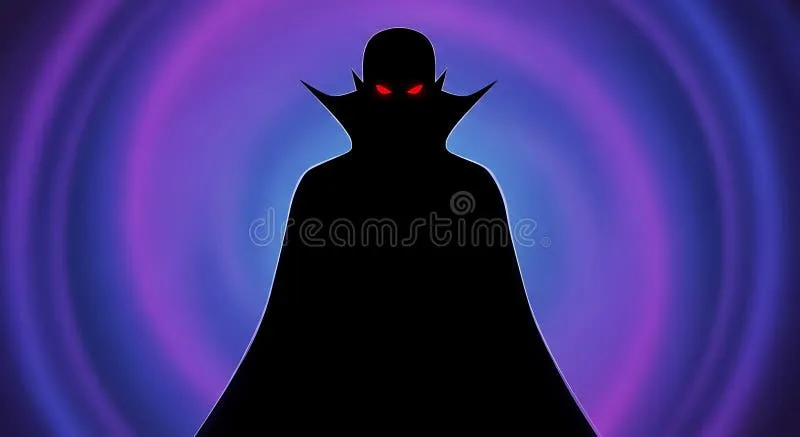
Photo: dramatic villain cinematic dark moody character silhouette, via thumbs.dreamstime.com
There's a moment — you know the one — where a character does something genuinely terrible on screen, and instead of recoiling, you lean forward. You're not horrified. You're invested. Maybe you even whispered "yes" under your breath like nobody was watching.
Welcome to the villain era. Population: basically all of us.
At some point over the last decade or so, American audiences quietly agreed to stop rooting for the clean-cut hero with the good values and the tidy arc. We traded him in for Walter White cooking meth in the desert, for Cersei Lannister playing chess with actual lives, for Fleabag breaking the fourth wall to drag us into her self-destruction. And we loved every second of it.
This isn't a fluke. It's a full-on cultural shift — and it says a lot about how we're consuming stories right now.
The 'Good Guy' Problem
Here's the thing about traditional heroes: they're often kind of boring. Not always, but often. The straightforward protagonist who does the right thing, faces a challenge, and wins through grit and virtue has been the backbone of storytelling forever. And there's a reason for that — it works. It's satisfying on a fundamental, almost primal level.
But satisfying isn't the same as interesting.
When a character operates in pure moral clarity, there's not a lot of room for surprise. You know where they're headed. The tension becomes external — will they survive? — rather than internal. Will they become something? Will they lose themselves? Will they make the choice we secretly hope they make even though we know we shouldn't?
That internal tension is where villains and antiheroes absolutely thrive. They exist in the gray zone, and the gray zone is endlessly fascinating.
Sympathy for the Devil (And the Drug Lord, and the Con Artist)
Think about the shows and films that have dominated cultural conversation in recent years. Succession gave us four of the most reprehensible wealthy people on television, and we couldn't stop watching any of them. Better Call Saul turned a side character into one of the most heartbreaking protagonists in TV history — a man making increasingly worse choices while we silently begged him to stop. Promising Young Woman, Parasite, The Dropout — stories anchored by characters who exist outside conventional morality, played with genuine complexity.
Even superhero media, which was supposed to be the last stronghold of clean-cut good versus evil, has leaned hard into this. Thanos became a meme. The Joker got his own origin film and an Oscar. Loki got a Disney+ series where audiences rooted for him harder than half the actual Avengers.
We don't just tolerate moral ambiguity anymore. We seek it out.
Why We Do It — The Psychology of the Dark Side
Rooting for the villain isn't just a quirky audience preference. There's real psychological meat on that bone.
For one, morally complex characters tend to be written with far more interiority than their heroic counterparts. We understand why they do what they do, even when what they do is objectively awful. Walter White doesn't just make meth — he makes it because his pride was wounded, because life handed him a raw deal, because he wanted, just once, to feel powerful. That's deeply human. Uncomfortably human.
There's also an element of vicarious rebellion in it. Most of us are out here following rules — paying taxes, being polite, swallowing frustration in traffic, keeping it together at work. Watching someone burn it all down and operate purely on their own terms? That scratches an itch that real life rarely lets you reach.
And then there's the identity piece. We choose the characters we champion, and those choices say something about us — or at least about the version of ourselves we're exploring from a safe distance. Identifying with a villain can be a way of processing darker impulses, questioning the systems around us, or simply refusing to accept a world that only rewards neat, uncomplicated goodness.
It's Also a Rebellion Against the Story We Were Sold
There's something almost political about this cultural turn, even if nobody frames it that way.
For a long time, mainstream storytelling — especially American mainstream storytelling — operated on a very specific moral economy. Good guys win. Bad guys lose. Justice is served. The arc bends toward redemption or punishment, and both feel earned.
But a lot of people have spent the last couple of decades watching that framework fall apart in real life. The good guys don't always win. The bad guys don't always face consequences. Institutions that were supposed to represent justice sometimes do the opposite. When the world stops delivering clean moral outcomes, stories that pretend otherwise start to feel a little naive — or worse, dishonest.
Villain-forward narratives feel more true to a lot of viewers. Not because we want to celebrate wrongdoing, but because complexity feels like honesty. And honesty, even uncomfortable honesty, is compelling.
The Line Between Enjoying and Endorsing
Here's where it gets a little nuanced, because not all villain content is created equal — and the conversation around it matters.
There's a difference between a story that presents a morally complex character with full awareness of their damage and a story that glamorizes harm without examination. The best villain-centric storytelling doesn't ask you to forget what these characters do. It asks you to understand it, sit with the discomfort, and maybe come out the other side knowing something you didn't before.
Breaking Bad doesn't let Walter White off the hook. Succession doesn't pretend the Roy family isn't destroying everything around them. The darkness is the point, and the point has weight.
When it works, rooting for the bad guy isn't about endorsing bad behavior — it's about engaging with the full spectrum of human experience through narrative. That's what storytelling has always been for.
The Villain Era Isn't Going Anywhere
If anything, we're deeper into it than ever. Streaming platforms have figured out that morally complex characters drive conversation, engagement, and the kind of passionate audience investment that keeps subscriptions alive. Writers and showrunners have more freedom than they've had in decades to go dark, go weird, and go complicated.
And audiences? We're ready. We've been ready. We just needed permission to stop pretending we weren't rooting for the wrong one all along.
So the next time a character does something unforgivable and you feel a little thrill instead of a gasp — don't sweat it. You're not broken. You're just watching TV the way it was always meant to be watched: with your whole, complicated, morally messy self fully in the room.