Streaming Platforms Know You'll Always Come Back to the Classics — And They're Counting On It
At some point in the last few years, you probably rewatched a show you'd already seen completely through at least once. Maybe twice. Maybe you've lost count. It was probably a sitcom. It was probably something that made you feel like a specific, earlier version of yourself. It was probably on in the background while you did something else, a familiar hum that required nothing from you.
You thought of it as a personal quirk. A little comfort habit. Something you do when the world gets to be a lot.
The streaming platforms thought of it as a business model.
The Catalog Is Not an Accident
When Netflix paid a reported $100 million to keep Friends for a single year before WarnerMedia eventually pulled it to launch HBO Max, a lot of people scratched their heads. A show that ended in 2004, with a catalog that had been available for years, was worth that kind of money?
Turns out, yes. Absolutely yes. Friends was consistently one of the most-watched titles on Netflix despite being decades old, and the uproar when it was announced it would leave was completely disproportionate to the age of the content. People weren't just watching it — they were depending on it being there.
That dependency is what the platforms are actually selling. Not access to new content. Not discovery. The quiet guarantee that when you need to decompress, when the news is bad and your brain is full and you just want something that won't surprise you, the thing you love will be right there waiting.
The Psychology of the Safe Rewatch
There's legitimate science behind why familiar content feels good when you're stressed. Researchers have found that rewatching shows you already know reduces the cognitive load of watching — you're not tracking new information, anticipating unknown outcomes, or meeting new characters. Your brain can relax in a way it genuinely can't with new content.
During periods of high collective anxiety — a global pandemic being the obvious recent example — viewership of older, familiar titles spiked dramatically. The Office, Parks and Recreation, Schitt's Creek, Cheers — shows built around warm ensemble casts and reliable narrative structures saw huge bumps in rewatches. People weren't choosing these shows because they were the best available option. They were choosing them because they were safe.
Platforms noticed. Of course they noticed.
How the Business Model Actually Works
Here's the thing about comfort rewatches that makes them so valuable to streaming companies: they're cheap. The licensing costs for older content, while not trivial, are significantly lower than the production costs for original programming. A new prestige drama might cost $10-15 million per episode to produce. Keeping Frasier or The West Wing in the catalog costs a fraction of that, and if people are watching it consistently, the math is very favorable.
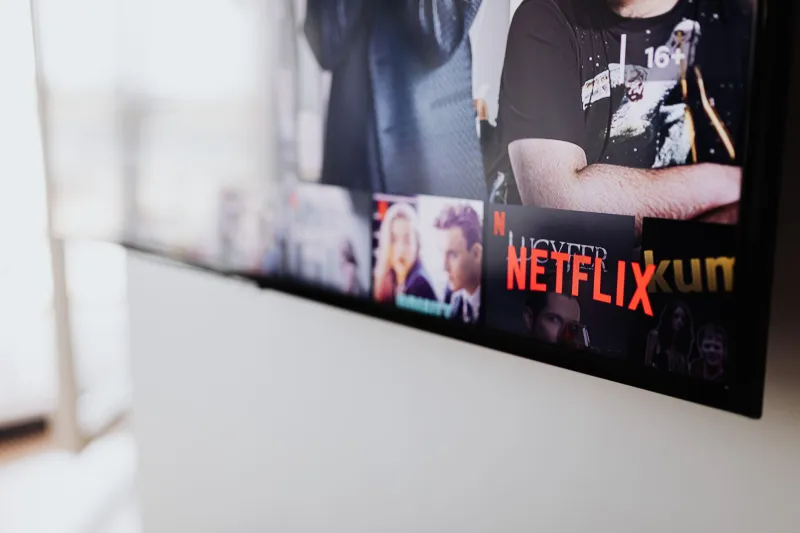
This creates a structural incentive to keep the classics around and keep them visible. When you open a streaming app and see a row of familiar thumbnails — the Central Perk couch, the Dunder Mifflin parking lot, the Seinfeld apartment — that's not random. That's deliberate placement designed to capture the exact moment when your decision-making energy is low and your need for comfort is high.
The algorithm learns your rewatch patterns, too. It knows that you put on The Office when you can't sleep. It knows you cycle back to New Girl when you've had a rough week. And it will absolutely use that information to keep you on the platform rather than surfing over to a competitor.
The Nostalgia Industrial Complex
Beyond the streaming world, there's a broader entertainment economy that's been quietly built around nostalgia as a primary product. Reboots, revivals, reunion specials, anniversary editions — these are all versions of the same pitch: you already love this, and we're going to give you more of it.
Some of this produces genuinely good content. The Frasier reboot has its fans. The Gilmore Girls revival scratched an itch for a lot of people. But a lot of it is straightforwardly trading on emotional attachment without delivering anything particularly new or interesting — and audiences keep paying for it anyway, because the familiarity itself is the product.
This isn't entirely the platforms' fault. They're responding to real demand. But they're also shaping that demand, surfacing nostalgic content in ways that make it easier to choose the familiar over the new, and then pointing to viewing numbers as proof that audiences prefer it. It becomes a self-fulfilling prophecy.
Is This Actually Bad for Us?
This is where it gets genuinely complicated, because the honest answer is: it depends.
Using familiar content as a decompression tool, the way you might use a hot bath or a comfort food meal, is not inherently harmful. Mental health professionals have noted that predictable, low-stakes media can serve a real function for people dealing with anxiety, depression, or just the ordinary exhaustion of modern life. There's nothing wrong with wanting something that won't demand too much from you.
The concern is when the comfort rewatch becomes the default rather than the occasional retreat. When the anxiety that drives you toward safe content is also being quietly amplified by the platforms themselves — through overwhelming catalogs, endless scroll, and content designed to provoke strong emotional reactions — and then those same platforms offer you the soothing familiar content as the solution, that's a loop worth examining.
You feel overwhelmed by choices, so you retreat to something safe, which reinforces the habit, which makes you less likely to explore new content, which means you need the safety net to be there, which means you keep the subscription. The platforms didn't create your anxiety, but they're not exactly incentivized to reduce it either.
Watching With a Little More Intention
None of this means you should feel guilty about rewatching Arrested Development for the fourth time or having Parks and Rec on in the background on a Sunday afternoon. That's genuinely fine. Life is hard and good television is one of its small pleasures.
But it's worth knowing that the comfort you're finding is also being monetized, that the platforms keeping those classics front and center are doing so because it benefits them, and that occasionally pushing yourself toward something unfamiliar — even when your brain would really rather not — is how you find the next show that eventually becomes your new comfort rewatch.
The classics will still be there. They're not going anywhere. That's kind of the whole point.