You've Never Met Them, But You'd Cry If They Quit: The Strange World of Parasocial Bonds
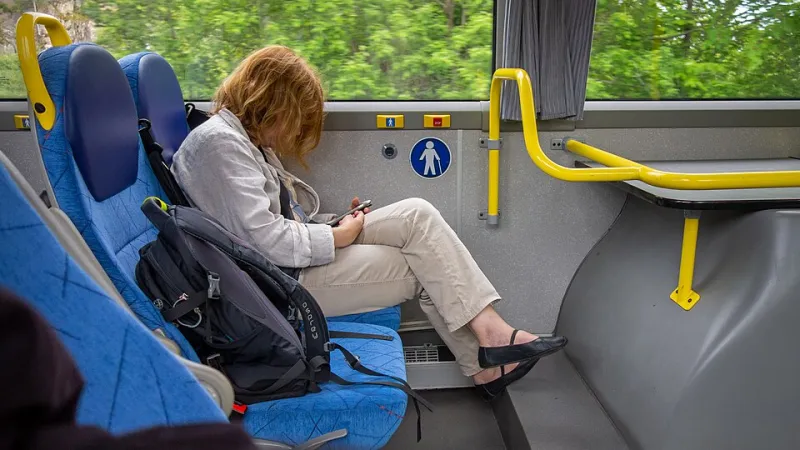
Photo: W.carter, CC BY-SA 4.0, via Wikimedia Commons
Let's be honest for a second. You've probably felt a little gutted when a favorite YouTuber announced a hiatus. Maybe you caught yourself genuinely worried about a podcaster who mentioned they were going through a rough patch. Or perhaps you've described a celebrity's personal drama to a friend using language like "she's been having such a hard time lately" — as if you two grab brunch on Sundays.
No judgment. Truly. Because this isn't some niche internet weirdness. It's one of the most quietly universal experiences of modern life, and there's a whole branch of psychology dedicated to unpacking it.
It's called a parasocial relationship — and odds are, you're in at least one right now.
So What Actually Is a Parasocial Relationship?
The term was first coined back in 1956 by sociologists Donald Horton and Richard Wohl, who noticed that television audiences were developing oddly intimate feelings toward TV personalities. They described it as a one-sided relationship where the audience member invests emotional energy, time, and interest into a media figure who doesn't — and can't — reciprocate in any real way.
For decades, this was mostly a TV and radio thing. Think about how Americans felt about Johnny Carson or Oprah. People genuinely felt like they knew these figures. But what's happening now, in the age of streaming, TikTok, and podcast culture, is something those 1950s researchers could never have predicted. The intimacy has been dialed up to an almost uncomfortable degree.
When a creator films themselves rolling out of bed, unfiltered and rambling about their anxiety over coffee, the psychological gap between "entertainer" and "friend" gets very, very thin.
The Algorithm Made It Weird (In the Best and Worst Ways)
Here's where things get interesting. Traditional celebrities always had a layer of distance. A movie star's life was curated through press releases and red carpets. There was a visible wall.
Now? A mid-size YouTube creator with 400,000 subscribers might post five times a week. They'll share their therapy breakthroughs, their relationship fights, their grocery hauls. They'll respond to comments, host live streams where they talk directly into the camera — directly at you — for two hours. Platforms like Patreon and Substack have made it even more intense, offering "exclusive" tiers that make fans feel like they're genuinely inside someone's inner circle.
Your brain, which evolved to interpret consistent social exposure as actual closeness, doesn't really know what to do with this. Neurologically speaking, it processes these repeated one-way interactions similarly to how it processes real friendships. You start to feel affection. Loyalty. Protectiveness. The emotional architecture is nearly identical — even though the relationship itself is fundamentally asymmetrical.
Real Talk: How This Shows Up in Everyday Life
It's not just the parasocial superfans who send 47 tweets defending their favorite creator. This stuff shows up in subtle, everyday ways.
You feel a specific kind of betrayal when a podcaster you love changes their format or "sells out" with too many ads. You get irrationally excited when a celebrity you follow does something you'd personally do — orders the same food, loves the same obscure band. You feel like you've lost something real when a beloved creator stops posting.
Remember when fans genuinely grieved the end of The Office or Parks and Recreation? Part of what made those shows so sticky was that the characters — and by extension, the real actors playing them, who fans followed on social media — felt like a community you belonged to. The line between fiction and parasocial reality blurred completely.
Then there's the darker side. Some people have been so deep in a parasocial bond that they've struggled to maintain real-world relationships. When a digital "friendship" feels safer, lower-stakes, and more consistently rewarding than the messy unpredictability of actual human connection, it can quietly become a substitute rather than a supplement.
Is This Actually a Problem?
Here's the part where it gets genuinely nuanced — and where a lot of the conversation gets it wrong.
Parasocial relationships are not inherently pathological. Research has actually found that they can serve real psychological functions. For people dealing with loneliness, social anxiety, or geographic isolation, these connections can offer a sense of community and belonging that they might not otherwise have access to. Feeling like you're part of a creator's "audience family" can be genuinely comforting in a world where a lot of Americans report feeling more disconnected than ever.
There's also something to be said for the way parasocial bonds can help people explore identity. Following a creator who shares your niche interests or lived experience — especially if those aren't well-represented in your immediate social circle — can be validating in ways that matter.
The problem isn't the bond itself. It's when the bond starts doing jobs it was never built for. When it replaces rather than supplements real connection. When it becomes a source of obsession or entitlement. When people forget that the person on the other side of the screen is, in fact, a person — with boundaries, bad days, and a life that exists entirely outside of whatever they choose to share.
What Creators Know That We Sometimes Forget
The most self-aware creators talk about this openly. Many of them have spoken publicly about the strange guilt of not being able to personally connect with every person who feels deeply connected to them. Some have described the emotional weight of knowing their audience's intimate details — through comments, DMs, and letters — while their audience only knows the version of themselves they've chosen to present.
That's the fundamental asymmetry that defines every parasocial relationship. And it's not a flaw in the system. It's just the nature of it.
The healthiest approach, both for audiences and creators, seems to be a kind of honest transparency about what these relationships are and aren't. Enjoy the connection. Let it bring you comfort or entertainment or community. But hold it loosely enough to remember that you also deserve — and need — people in your life who actually know your name.
The Bottom Line
You can love a creator, feel genuinely inspired by a celebrity, and feel a real sense of loss when a show ends. None of that makes you strange or broken. It makes you human in a media landscape that has gotten extraordinarily good at making you feel seen by people who have never seen you.
Just don't let the parasocial world crowd out the real one. The messier, less-edited, sometimes-disappointing real one is still where your actual life is happening.
And honestly? That's worth showing up for.